
In the electrical equipment manufacturing industry—particularly in the production of low-voltage switchgear—the precision and efficiency of busbar processing directly impact the reliability of the power system. Selecting the appropriate busbar bending machine is therefore crucial for enhancing processing efficiency and precision, as well as for controlling long-term operating costs.
Many customers find themselves torn: “Should I opt for a traditional hydraulic busbar bending machine, or the latest, state-of-the-art servo-driven model?” In reality, making this choice is much like deciding between an off-road vehicle and a Tesla—there is no absolute “better” or “worse” option, only the solution that best suits your specific operating conditions. In this article, I will conduct an in-depth analysis of the differences between hydraulic and servo-driven busbar machines, examining them across multiple dimensions—including technical principles, processing precision, maintenance costs, and Return on Investment (ROI).
Why is the driving method so important for busbar bending?
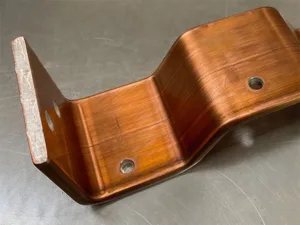
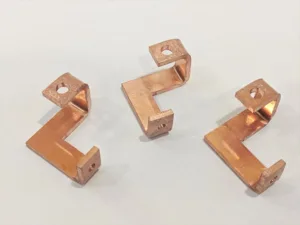
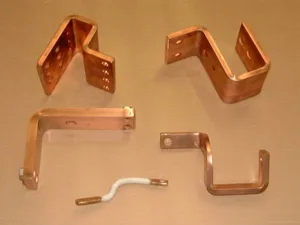
Busbar bending differs from standard sheet metal bending. Given that copper and aluminum busbars possess high conductivity, high ductility, and distinct springback characteristics, the stability of the drive system directly determines:
- Angular Accuracy: Determines whether the busbar can be precisely aligned with the terminals during installation.
- Surface Quality: Determines whether the tin plating layer will be damaged or microcracks will form.
- Long-term Energy Consumption: Impacts the factory’s operating costs.

What is a hydraulic busbar bending machine?
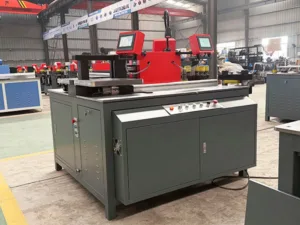
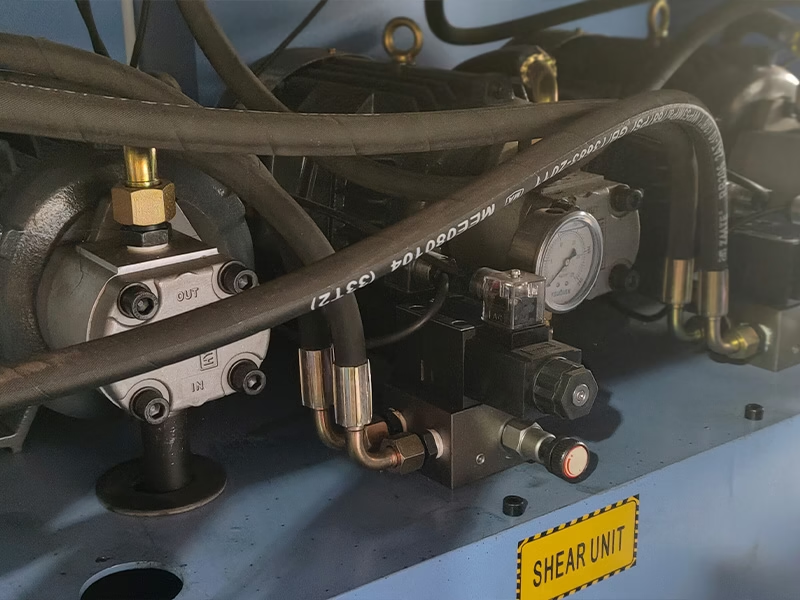
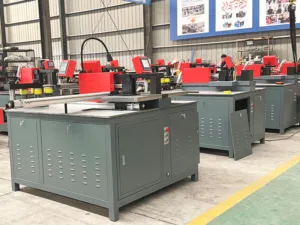
A hydraulic busbar bending machine relies on a hydraulic pump to generate high pressure, which, via a hydraulic cylinder, drives the bending die forward to execute the bending operation. This process essentially converts fluid power into mechanical energy. A prime example of a hydraulically driven machine—and a top-selling model on the market—is the SS-50-3 CNC PRO busbar bender manufactured by SUNSHINE, a renowned Chinese manufacturer of busbar processing equipment.
Key Advantages and Features
- Powerful Performance: Particularly well-suited for processing busbars with large cross-sections and substantial thickness (e.g., 15mm or 20mm thick copper bars). The hydraulic system delivers highly reliable explosive force when handling heavy-duty tasks.
- High Cost-Effectiveness: Compared to servo-driven busbar bending machines, hydraulic busbar bending machines feature lower initial acquisition costs, making them an ideal and budget-friendly choice for small to medium-sized electrical panel factories or manufacturers of low-voltage switchgear.
- Technical Maturity: The structure is simple and intuitive. Even in remote areas, a standard mechanic can quickly address issues such as oil leaks or valve replacements, and spare parts are globally interchangeable.
Technical Limitations
- Difficulty in Springback Compensation: Because the viscosity of hydraulic fluid varies with temperature, the operating pressure within the hydraulic cylinder is not entirely constant; consequently, achieving extremely high precision in angle control is relatively difficult.
- High Energy Consumption: Even when the machine is idle, the oil pump typically continues to run continuously, resulting in significant electricity waste.
- Tedious Maintenance: Requires the periodic replacement of hydraulic fluid and cleaning of filter elements, and carries a risk of oil leakage during prolonged operation.
What is a servo-driven busbar bending machine?
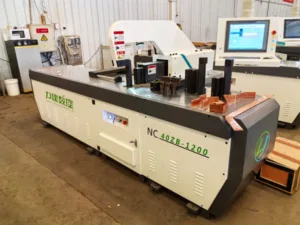
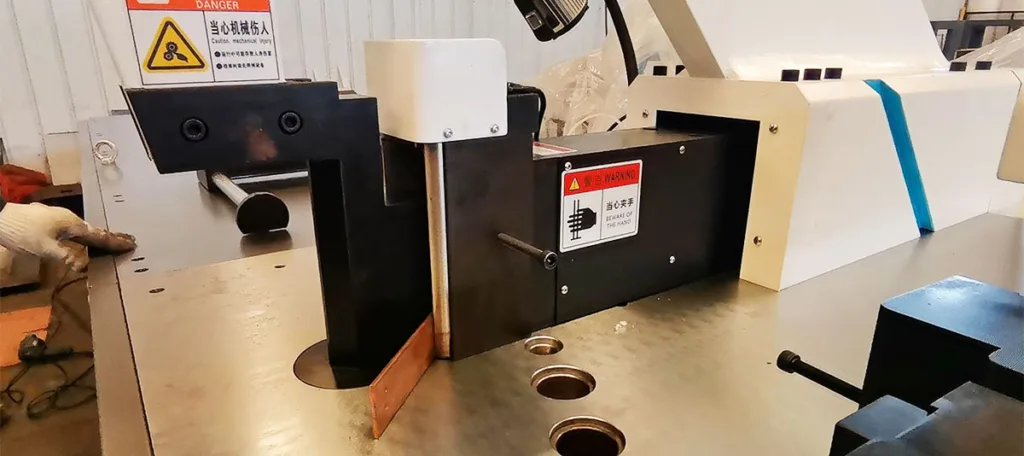
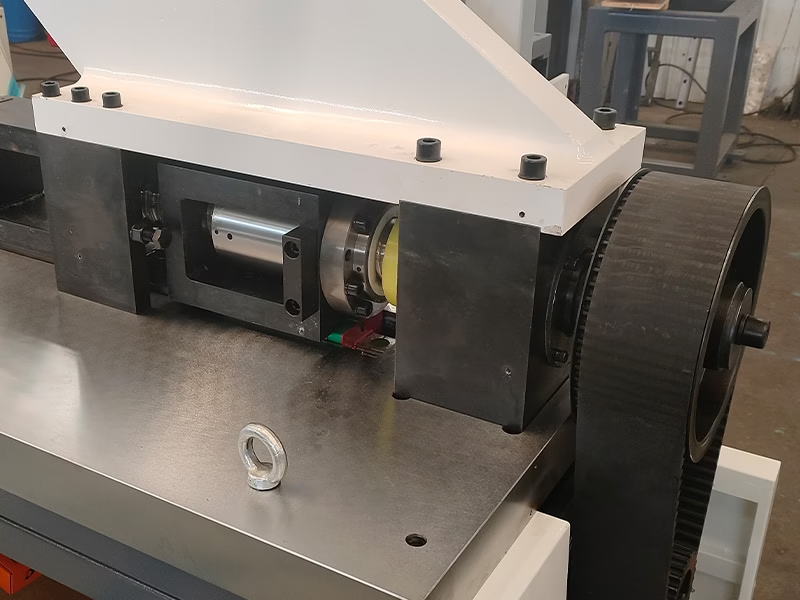
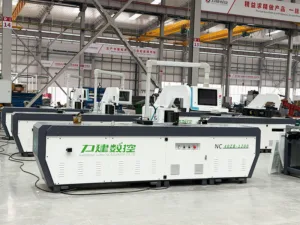
A servo-driven busbar bending machine utilizes a servo motor—acting via a precision ball screw—to directly receive pulse signals from a CNC system and control the busbar bending die. Rather than merely “pressing down,” it precisely “positions itself” at a specific location. The most representative example of a servo-driven model—and one that has garnered high praise from customers—is the NC40.ZB-1200 CNC Busbar Bending Machine, manufactured by MAC, a leading producer of CNC busbar processing equipment.
Key Advantages and Features
- Extreme Precision (±0.1°): The servo motor, integrated with a CNC system, enables closed-loop control capable of real-time position sensing. Combined with an automatic springback compensation algorithm, angular tolerance is maintained within a range of ±0.1° to ±0.3°, ensuring exceptional consistency in bending angles—making it ideally suited for data center power distribution projects with stringent precision requirements.
Related Article: The Impact of Springback Compensation on Busbar Bending Accuracy - High Efficiency and Energy Savings: The servo motor responds instantly on demand. When bending operations cease, the motor consumes virtually no power. Compared to traditional hydraulic systems, servo-driven machines can reduce electricity costs by approximately 30% to 50%.
- Low Temperature Rise and Low Noise: Due to the absence of continuous friction from circulating fluid, the machine generates extremely low heat; its operating noise is significantly lower than that of hydraulic presses, thereby substantially improving the factory environment.
- Rapid Response: When performing small-angle continuous bending or high-frequency punching, the rhythm and efficiency of the servo system far surpass those of hydraulic systems.
Technical Limitations
- High Initial Investment: Servo motors and precision controllers are expensive, and the selling price of the complete machine is typically more than 20% higher than that of the hydraulic version.
- High Maintenance Requirements: The electronic components of servo controllers are more sensitive to dust and power grid stability.
The Difference Between Hydraulic and Servo Drives
Hydraulic busbar machines possess inherent advantages for processing large-format copper busbars—particularly those exceeding 15 mm in thickness. Coupled with their low initial acquisition costs, hydraulic busbar bending machines represent the optimal choice for the majority of switchgear manufacturers, especially small-to-medium-sized enterprises and early-stage startups.
Servo Drives
Hydraulic Drives
In contrast to the hydraulic busbar bending machine’s advantage in processing large-format busbars, the servo busbar bending machine excels in angle precision control and springback compensation mechanisms. Its servo drive, integrated with a CNC system, enables closed-loop control capable of real-time position sensing. Utilizing an automatic springback compensation algorithm, it maintains an angle tolerance within a range of ±0.1° to 0.3°. This makes it ideally suited for busbar processing enterprises with stringent requirements for both bending precision and efficiency, serving as the optimal bending solution for large-scale electrical panel manufacturers and switchgear factories.
| Characteristic | Hydraulic Busbar Machine | Servo-Driven Busbar Machine |
|---|---|---|
| Drive Source | Motor + Oil Pump + Hydraulic Cylinder | Servo Motor + Precision Transmission |
| Processing Thickness | It offers distinct advantages and is suitable for large-format busbars. | Suitable for processing medium-to-thin plates and for high-frequency processing. |
| Angle Accuracy | ±0.5°~1° | ±0.1°~0.3° |
| Energy Efficiency Rating | Low (Pump station running continuously) | Extremely High (Energy-on-Demand) |
| Work Environment | Significant fumes and noise | Clean And Quiet |
| Payback Period | Short-term (reliant on low procurement costs) | Long (but offset by electricity savings) |
How to choose the right busbar bending machine for you?
Robin, the Sales Manager at SUNSHINE—a manufacturer of CNC busbar processing machines—shared with me the insights gained from nearly a decade of sales experience in the industry, as well as the user experiences of over 1,000 clients. His aim was to help me assist even more customers in selecting a suitable busbar bending machine more quickly and effectively. Robin noted that when choosing a busbar bending machine, there are four primary factors to consider: processing requirements, budget, after-sales support capabilities, and the factory environment.
Determined based on processing requirements
-
Hydraulic Drive: Ideal for processing large-format busbars—specifically, for the frequent processing of heavy-gauge copper bars ranging from 15 mm to 20 mm in thickness. The hydraulic system delivers immense power and maintains exceptional stability under sustained high-pressure output.
-
Servo Drive: Ideal for processing small-gauge busbars where angle precision requirements are extremely stringent (within ±0.3°)—such as in the production of distribution cabinets for data centers, new energy sectors, and aerospace applications. The closed-loop feedback mechanism of the servo system ensures that every finished busbar produced is absolutely identical, resulting in virtually zero waste.
Based on the factory environment
-
Servo Drive: The servo motor features “instant start-and-stop” capabilities. When idle, it operates in complete silence, the oil circuit ceases circulation, and the oil temperature remains extremely low. This not only extends the service life of the seals but also creates a remarkably clean and sophisticated workshop environment—ideal for successfully passing factory audits conducted by high-end clients.
-
Hydraulic Drive: If your facility is a traditional heavy industrial complex and is not sensitive to noise, a hydraulic press is perfectly capable of meeting your needs. However, please note that during hot summer months, the hydraulic press may require an auxiliary cooling system to prevent excessive oil temperatures from compromising precision.
Judging based on cost-effectiveness
-
Servo Drive (Long-Distance Runner): It reduces electricity costs by 30% to 50% compared to traditional hydraulic systems. If electricity rates in your region are high, or if you require intensive daily operation for more than 10 hours, the additional upfront cost of a servo-driven machine can typically be recouped through electricity savings within one to two years.
-
Hydraulic Drive (Economical Model): If you only operate the machine occasionally, or if your daily processing volume is relatively low, the lower upfront purchase price of a hydraulic machine can help you save a significant amount of cash flow.
Based on After-Sales Capabilities
-
Hydraulic Drive: Its underlying logic relies on mechanical and hydraulic valves. Even in less developed regions, a standard mechanic can resolve issues simply by replacing seals or cleaning the valves. Spare parts—such as filter elements and oil seals—are readily available at any hardware market.
-
Servo Drives: At their core, they consist of a drive unit and a motor—components classified as precision electronics. If your facility lacks specialized electrical control technicians, a system error typically necessitates contacting the manufacturer for remote support or replacing the affected module. These systems are somewhat more “delicate,” requiring a cleaner and more stable voltage environment.
| Your Situation | Proposed Solution | Reason |
|---|---|---|
| Just starting out, tight budget, thick copper busbars | Hydraulic | Low initial investment, rapid return on capital—go all in, and miracles will happen. |
| Targeting the high-end market, with high order precision | Servo | Virtually zero waste—the angle is set perfectly on the very first attempt. |
| Electricity costs in the region are high, driving a pursuit of green production | Servo | Achieves maximum energy efficiency and boasts a high environmental compliance rate. |
| The factory is located in a remote area, making after-sales service inconvenient | Hydraulic | The structure is simple, so you can repair it yourself. |